Wednesday, 27 June 2018
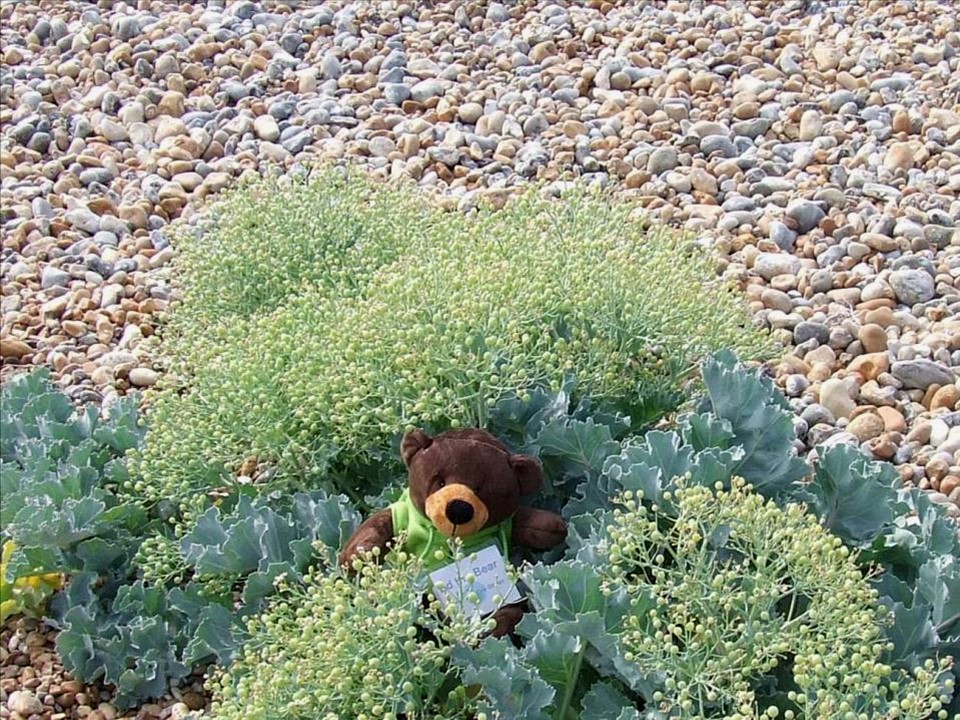
Ed the Bear returned to the EYE Eco Summit
We returned again to the EYE Project (Eco Young Engaged) to run workshops. This is the project's 11th year and growing.
This year we set up our artificial beach to create a seashore strandline. Children could explore the natural objects washed up on the beach and explore the clues that these objects provide us about life around our coast.
What does a cuttlefish look like? how does a dogfish grow inside its egg capsule, how do predatory dogfish eat mussels and much more was explored through a visual PowerPoint strandline quiz.
The children could also examine the man-made rubbish that washes up on the beach?
Choosing an item they had to consider what the object was, how it might have found its way to the beach and how it might be dangerous to marine wildlife.
We also took along our exhibition stand including Shoreham Beach Local Nature Reserve, as well as the story of Ed the Bears travels, some of the fabulous places he has visited, amazing wildlife he has encountered but also some of the damage caused by humans.
It was an amazing day and we meet some great children full of enthusiasm and great questions and of course, dedication to help the environment.
This year we set up our artificial beach to create a seashore strandline. Children could explore the natural objects washed up on the beach and explore the clues that these objects provide us about life around our coast.
What does a cuttlefish look like? how does a dogfish grow inside its egg capsule, how do predatory dogfish eat mussels and much more was explored through a visual PowerPoint strandline quiz.
The children could also examine the man-made rubbish that washes up on the beach?
Choosing an item they had to consider what the object was, how it might have found its way to the beach and how it might be dangerous to marine wildlife.
We also took along our exhibition stand including Shoreham Beach Local Nature Reserve, as well as the story of Ed the Bears travels, some of the fabulous places he has visited, amazing wildlife he has encountered but also some of the damage caused by humans.
It was an amazing day and we meet some great children full of enthusiasm and great questions and of course, dedication to help the environment.
Labels:
Ed the Bear,
Eye project. Shoreham Beach,
oceans,
plastic,
Pollution,
strandline
Saturday, 23 June 2018
Exploring our local coast with school
A week of working with schools visiting the nature reserve.
We have changed location this year due to the river flood defence which is still going on at our usual rock pool beach.
This is part of river flood defence that should protect Shoreham for the next 100 years.
So instead we collected a few sea creatures each morning from another local beach (but suitable for school visits) and set them up on tables for the children to have a close up view and learn about during our presentation and Q&A
We found some fascinating rock pool life including goby fish and this camouflaged blenny
We also found this live oyster attached to a rock. The juvenile oyster settles on a rock and glues itself on and the shell grows out like a shelf.
There were also lots of juvenile shore crabs.
Their colour matches their surroundings when they are young, but when fully grow have their adult colours, green on top and orange underneath.
Afterwards, the children explored the shingle beach, learning about the rare vegetated shingle habitat, the seashore strandline and also learned about plastic pollution during a litter pick.
Well done to all the schools we worked with this week, you did some amazing work.
All best, Ed the Bear.
This is part of river flood defence that should protect Shoreham for the next 100 years.
So instead we collected a few sea creatures each morning from another local beach (but suitable for school visits) and set them up on tables for the children to have a close up view and learn about during our presentation and Q&A
We also found this live oyster attached to a rock. The juvenile oyster settles on a rock and glues itself on and the shell grows out like a shelf.
There were also lots of juvenile shore crabs.
Their colour matches their surroundings when they are young, but when fully grow have their adult colours, green on top and orange underneath.
Afterwards, the children explored the shingle beach, learning about the rare vegetated shingle habitat, the seashore strandline and also learned about plastic pollution during a litter pick.
Well done to all the schools we worked with this week, you did some amazing work.
All best, Ed the Bear.
Wednesday, 13 June 2018
World Ocean Day Message 3
Back in September 2009 I started my global travel to find out more about how Shoreham Beach Local Nature Reserve was connected to the global ocean.
As you know Shoreham Beach has a rare habitat called vegetated shingle, which grown just above the high tide line.
We were concerned about how global threats such as climate change and global warming might damage the shingle beach.
To understand how this might happen we decided we needed to understand more about the global ocean and that's were my journey began.
I visited many scientists and experts to learn about the ocean, including NOAA who built me my amazing underwater dive bubble.
I learned how Shoreham Beach was threatened by sea level rise which could flood the rare plant habitat or create bigger storms that could wash the beach away.
I also discovered that sea level can cause flooding from rivers too.
The environment agency are currently building a new flood defence wall along the river which should protect the town, the airport and surrounding land for the next 100 years.
I have also encountered amazing wildlife on my travels to, from penguins in Antarctica to coral reefs of Florida and great white sharks off the coast of South Africa
Follow my amazing adventures on this blog. You can also find out more about the One Ocean Project and how we can help the ocean at http://seawatch17.wixsite.com/one-world-one-ocean
As you know Shoreham Beach has a rare habitat called vegetated shingle, which grown just above the high tide line.
We were concerned about how global threats such as climate change and global warming might damage the shingle beach.
To understand how this might happen we decided we needed to understand more about the global ocean and that's were my journey began.
I visited many scientists and experts to learn about the ocean, including NOAA who built me my amazing underwater dive bubble.
I also discovered that sea level can cause flooding from rivers too.
The environment agency are currently building a new flood defence wall along the river which should protect the town, the airport and surrounding land for the next 100 years.
I have also encountered amazing wildlife on my travels to, from penguins in Antarctica to coral reefs of Florida and great white sharks off the coast of South Africa
Follow my amazing adventures on this blog. You can also find out more about the One Ocean Project and how we can help the ocean at http://seawatch17.wixsite.com/one-world-one-ocean
Monday, 11 June 2018
World Ocean Day Message part 2
As mentioned in my last post, oceans are awesome, teaming with amazing biodiversity and providing us with important stuff like oxygen to breathe, water to drink.
But sadly, the ocean system is struggling against human damage and on my travels I have sadly encountered this in many places from Sussex to Antarctica.
The planet is getting warmer which includes the oceans too. Warmer oceans are causing the polar ice to melt causing sea level rise.
However the oceans are getting rising because the oceans are getting warmer, because water expands when it is heated, and takes up more space in the ocean basins.
Warmer oceans are changing where some marine animals live. This is disrupting food chains and some animals are starving.
Sea birds that usually catch sand eels near to sure are having to fly further to catch food for their chicks and many are now not able to catch enough food to feed them.
Warmer seas, pollution ocean acidity are just some of the threats to coral reefs which are dying
Warmer seas mean more tropical storms. More moisture in the air will power stronger more powerful storms that can upset global weather patterns.
Sea level rise and stronger storms means more coastal erosion.
On my travels to the Hawaiian Islands I meet some dedicated people and learned a very important Hawaiian word Kuleana. This means Responsibility, but responsibility at a cultural level.
The bad news is, we are all responsible as we contribute to the damage to the oceans through modern living. The good news is, that we are all responsible, which means we can also do something about it by making small changes to how we live.
Find out more in the final post coming soon
But sadly, the ocean system is struggling against human damage and on my travels I have sadly encountered this in many places from Sussex to Antarctica.
The planet is getting warmer which includes the oceans too. Warmer oceans are causing the polar ice to melt causing sea level rise.
However the oceans are getting rising because the oceans are getting warmer, because water expands when it is heated, and takes up more space in the ocean basins.
Warmer oceans are changing where some marine animals live. This is disrupting food chains and some animals are starving.
Sea birds that usually catch sand eels near to sure are having to fly further to catch food for their chicks and many are now not able to catch enough food to feed them.
Warmer seas, pollution ocean acidity are just some of the threats to coral reefs which are dying
Warmer seas mean more tropical storms. More moisture in the air will power stronger more powerful storms that can upset global weather patterns.
Sea level rise and stronger storms means more coastal erosion.
On my travels to the Hawaiian Islands I meet some dedicated people and learned a very important Hawaiian word Kuleana. This means Responsibility, but responsibility at a cultural level.
The bad news is, we are all responsible as we contribute to the damage to the oceans through modern living. The good news is, that we are all responsible, which means we can also do something about it by making small changes to how we live.
Find out more in the final post coming soon
Labels:
Ed the Bear,
Ocean literacy,
Sussex. EMSEA,
World Oceans Day
Friday, 8 June 2018
Celebration World Oceans Day
Hi all
I hope you have been out celebrating World Oceans Day. This is an event that not only celebrates the amazing biodiversity of marine life but also the many ways that we benefit from the ocean everyday.
We might think that the seas and oceans divide us, but actually we are all linked by the ocean.
Plankton is a vital component of marine food webs. Even though we don't eat them directly, (although we have probably eaten fish that have), there are also other reasons why we need plankton.
We also rely on the ocean for freshwater and food.
Oceans are also a lot of fun providing us with essential wellbeing.
I hope you have been out celebrating World Oceans Day. This is an event that not only celebrates the amazing biodiversity of marine life but also the many ways that we benefit from the ocean everyday.
We might think that the seas and oceans divide us, but actually we are all linked by the ocean.
Without the oceans, life on earth would be very different
Plankton is a vital component of marine food webs. Even though we don't eat them directly, (although we have probably eaten fish that have), there are also other reasons why we need plankton.
We also rely on the ocean for freshwater and food.
Oceans are also a lot of fun providing us with essential wellbeing.
But the oceans are endangered through many human activities.
Find out more about how the oceans are threatened in tomorrows post
Friday, 5 January 2018
Wisdom the oldest known bird returns to nest.
Hi all
I have just heard some amazing news. Wisdom, the Laysan Albatross, has returned to her Hawaiian nesting grounds.
Wisdom has returned to Midway Atoll in Papahānaumokuākea
with her mate Akeakamai for the winter breeding season. U.S. Fish and Wildlife
Service staff have confirmed that they have nested and currently incubating an egg.
Wisdom was first ringed with a numbered leg band in 1956, Wisdom has successfully
raised and fledged over 35 and travelled millions of miles
in her lifetime.
You may remember I travelled to Papahānaumokuākea back in 2010 to see Wisdom and many other nesting albatross.
You may remember I also wear a special necklace, gifted to me by Ron Hirshi and Fred which is made from a albatross numbered leg band. I wear this in remembrance of all the Laysan Albatross chicks they did not get to grow up and died from swallowing plastic. The numbered leg band I wear came from such a chick that died from swallowing plastic.
So I look forward each year to hearing that Wisdom has returned.
Labels:
Ed the Bear,
Laysan Albatross,
plastic pollution,
Wisdom
Wednesday, 16 August 2017
Rampion Windfarm
The Rampion Windfarm off the coast of the Shoreham Beach Local Nature Reserve is now well underway.
The wind farm is between 8 and 16 miles from the shore.
There will be 116 turbines when its finished each standing 142 metres tall. The wind farm will generate enough power for 290,000 homes and replace 600,000 tons of carbon dioxide. Wind turbines harness the (free) and like early sailors wind farms use the naturally occurring winds that blow across the ocean.
The windfarm will be completed by the end of 2018. Renewable energy sources like this are so important to help reduce man-made climate change and great to see this happening on our own doorstep.
Labels:
climate change,
Ed the Bear,
Ocean literacy,
Rampion windfarm,
windpower
Subscribe to:
Posts (Atom)