Hi all
As you know we took part in the Marine Conservation Society Great British Beach Clean back in September.
To help us share this message with local schools we made the following video
Bye all
Ed the Bear
Showing posts with label Shoreham Beach Local Nature Reserve. Show all posts
Showing posts with label Shoreham Beach Local Nature Reserve. Show all posts
Monday, 7 November 2016

Saturday, 22 October 2016
MP Tim Loughton unveils new signage on the nature reserve
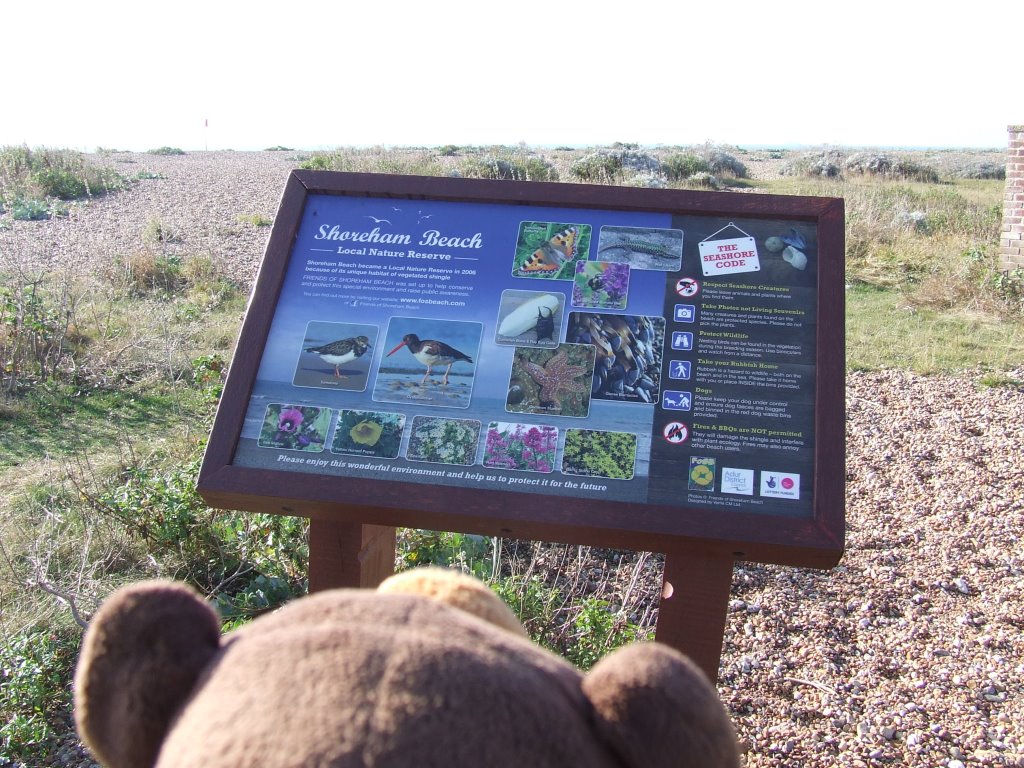
Local MP Tim Loughton unveiled the new education and awareness signage on Shoreham Beach Local Nature Reserve - part of the 10 year anniversary of the reserve.

The unveiling commenced at 10.45am on the eastern end of the nature reserve.

Joy Daintree, the chairperson for Friends of Shoreham Beach, welcomed everyone and spoke about the last 10 years of the reserve - and its achievements.
 Joy also spoke about the 10 year celebration and the Heritage Lottery Funding that had funded new information signage and also some educational events - some of which have been discussed in previous posts.
 Tim Loughton the cut the ribbon and unveiled the new signs.


Afterwards everyone gathered for a press photograph around the signage.
 There are seven new information panels - but only one was official unveiled on the day - as the remaining six were positioned at various entrances to the reserve.
 The new signage is very eye catching as well as informative.

The unveiling commenced at 10.45am on the eastern end of the nature reserve.

Joy Daintree, the chairperson for Friends of Shoreham Beach, welcomed everyone and spoke about the last 10 years of the reserve - and its achievements.


Afterwards everyone gathered for a press photograph around the signage.

Sunday, 18 September 2016
Ed the Bear helps with Friends of Shoreham Beach - Beach Clean event
Friends of Shoreham Beach take part each year in the Marine Conservation Society - Great British Beach Clean http://www.mcsuk.org/beachwatch/greatbritishbeachclean
This year the local event was on 18th September, and organised by John Charlish committee member Friends of Shoreham Beach.

Also this year I was able to come along with Ed the Bear to help with the planned beach clean and to provide a deeper awareness and understanding of the global and local problems caused by plastic. The event base was set up alongside the recently constructed boardwalk (which is actually made from recycled plastic)

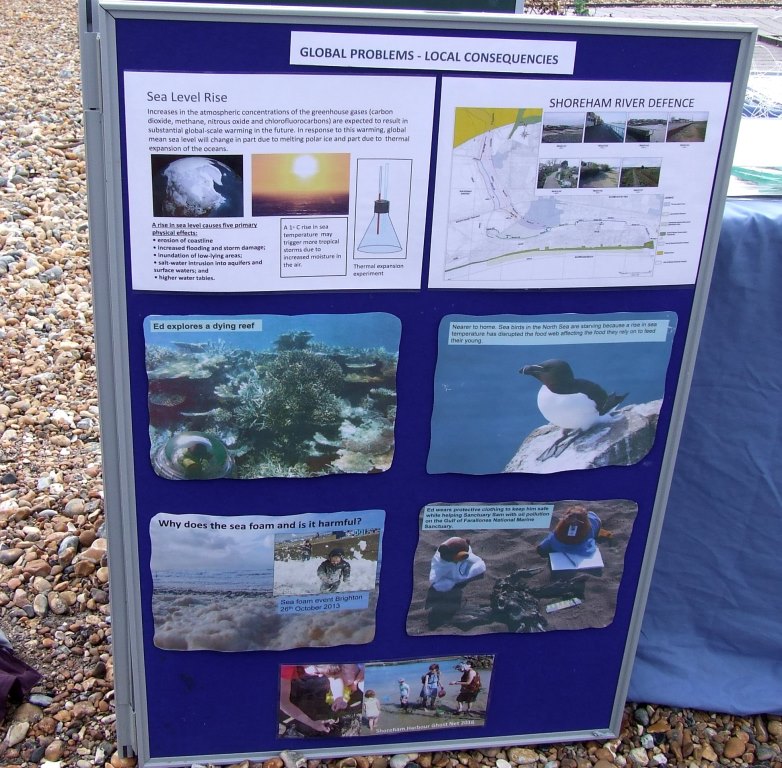
The display stand also included pictures and information from the One World One Ocean Project and Ed the Bear.
As you know I have been send Ed the Bear to scientists around the world to find our about the ocean and ocean conservation which we then share at events and visiting schools using to create links between the local and global, a celebration of the ocean which includes a focus on conservation issues explored first hand. http://seawatch17.wixsite.com/one-world-one-ocean

This also included local and global examples of plastic debris (including plastic strapping which came from cape fur seals that were entangled in the plastic, plastic incidents around the world including the necklace gifted to Ed the Bear while in Hawaiian islands – made from a numbered scientific leg band from an albatross chick that died from swallowing plastic.
Ed raises awareness of the plight of these majestic birds and also about the dangers to UK sea birds such as fulmar. There was also a big focus on micro plastics – from how large plastics items degrade into spammer items (which can be ingested) and also micro beads and other human sources.


Part of the display also focused on the fact that not everything you find on the beach is rubbish – focusing on ray, dogfish, whelk and similar egg cases that look like they are plastic.
I spoke to the participants about plastic pollution as they gathered awaiting the start of the beach clean. This included explaining about micro plastics and how the smaller items on the beach are often more dangerous to local marine life.


After a briefing by John the participants, armed with a large bags, gloves and grabbers, started the beach clean.

They were divided into two groups, one group which would undertake the finger-tip litter pick survey which would be sent to MCS, the remained cleaned the beach outside of this designated area.

I remained by the stand for a while and spoke to members of the public passing along the boardwalk.


I then headed off down the far end of the beach clean boundary to check up and support the volunteers, as well as answer questions and share information.
I met a family who had come along to the rock pooling with a microscope event I ran back in August - which was also funded by the heritage lottery grant.


I walked back with the last of the volunteers as they returned with their bags of debris and returned the grabbers.

A final chance to talk to participants before the event ended. A large amount of debris was removed from the beach – however there were fewer large items found this time – so maybe the message is getting across. This meant we collected a lot of smaller items of plastic.


We still have to tally up the amount of litter collected and the result of the marine litter survey. The bags of litter collected will be collected for us by Adur District Council. It was a very successful day.
Saturday, 27 August 2016
Ed the Bear at Adur River Festival 2016
My buddy Steve took me and a display to River fest on 27th August. FoSB’s Julia Fowles assisted on the stand in the morning. River Fest took place on Coronation Green on the edge of the river Adur giving a perfect location for the event.
 Shoreham beach is connected to the River Adur in many ways;
in fact it was formed by the sea, coastal processes, and the river. The have
both been tied together by maritime history and there are also many natural
connections between Shoreham beach, the sea, river estuary and the river.
Shoreham beach is connected to the River Adur in many ways;
in fact it was formed by the sea, coastal processes, and the river. The have
both been tied together by maritime history and there are also many natural
connections between Shoreham beach, the sea, river estuary and the river.
 So,
where better to raise awareness and celebrate this than River Fest.
So,
where better to raise awareness and celebrate this than River Fest.

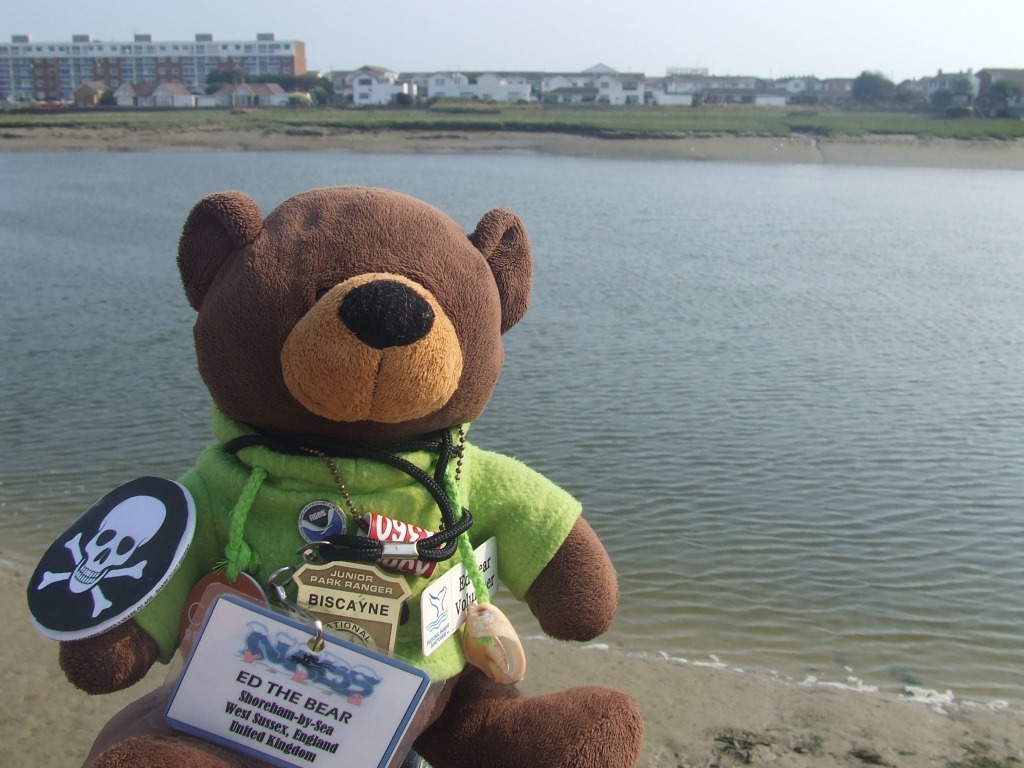
The display stand was tailored especially for this event and
explained various topics. ‘Why Shoreham Beach is Special’ – focusing on the
role of the nature reserve and the rare vegetated shingle habitat.

‘Why the
Ocean is important’ focused on the benefits we all receive from the ocean
(freshwater, 50% of our oxygen, 15% of our food and much more included how the
ocean creates and moderates our climate and weather.

This linked well to
another display panel ‘Global Problems – Local Consequences’ focused on rising
sea temperature and how melting ice and expanding oceans (as water heats up)
linked to the local consequence of local sea defence work and the current river
defence development.

This panel also focused on plastic pollution – including
micro plastics which are injected by marine life including plankton.

This also included our display about plastic pollution and a micro plastic activity.

To help raise awareness of global issues we shared my adventures Ed the Bear
visiting scientists around the world
and sharing their knowledge with schools and also the public.

A panel explained how Shoreham Beach had been formed over
centuries by longshore drift and the river Adur using maps starting at 13th
Century to modern time.


This panel also explained about Shoreham’s important
maritime heritage including the ship building and trade and Steve entered into the
spirit of the event and the pirate theme by dressing as a pirate.

A final panel illustrated some of the birds that visit the
Adur estuary and beach and also examples of the many sightings of seals and
dolphins that Steve has recorded over the years – off Shoreham beach and in the
river Adur, as Sussex Regional Coordinator for the Sea Watch Foundation which
he has run as a volunteer since 1993.


Steve spoke to many local
people and as hoped, this allowed us to connect with a different section of the
local community than we usually engage with at out nature walks etc. The event
was busy all day and there was a wide range of ages. It was a great day oooh! ahhhh!
Saturday, 20 August 2016
Why is Shoreham Beach So Special?
Ed the Bear helped share raise awareness of his fascinating beach which is also a local nature reserve. I organised and ran this event as part of the 10 year celebration of the Shoreham Beach Nature Reserve.
This event took place at the Church of the Good Shepherd Hall on Shoreham Beach and on the adjacent Shoreham Beach Local Nature Reserve with help from FoSB’s Chris Bohea.

Sadly the previous spell of hot weather broke and we had heavy rain early on in the morning and then 50 mph winds blowing along the beach. This almost certainly impacted in the number of people who turned up for this event.
However we did get a few families come along to the event and a couple of individuals and despite these conditions they were very enthusiastic.

Partly for safety reasons and partly to include as much of the original planned content, I adapted the event to accommodate the bad weather but still keep as much of the original content.
Instead of one presentation and the remainder taking pace on the beach, I ran part of the Why is Shoreham Beach Special presentation (focusing on the nature reserve, vegetated shingle habitat, wildlife and how Shoreham beach was formed and shaped by the river and coastal processes – which continue today. Plus activity about plastic pollution and micro-plastics. People then eat lunch in the hall instead of on the beach.

After this we all went over to the beach for about 20 minutes (participant’s safety uppermost) and looked at the shingle plants and sea birds.

We collected pebbles and strandline objects and brought them back to the hall to consider what we could learn from observing them.


After a while I ran a seashore strandline quiz – including lots of pictures of the animals that the objects they had found actually came from such as cuttlefish and their eggs, dogfish and egg development sequence, rays, whelk eggs, etc.

The event finished with local and global links using Ed the Bear based at Shoreham Beach to consider how Shoreham beach is connected to the global ocean, how we benefit from the ocean (moderates our climate and weather, provides 50% of our oxygen etc) and how global issues (such as climate change and sea level rise might impact Shoreham beach and the nature reserve. Lots of images made the session very visual and also had an intriguing quiz element.
Despite the weather and the need to run more of the event inside – everyone seemed to have an enjoyable day. This event was funded by the Awards for All Heritage Lottery helping us to celebrate Shoreham Beach’s 10 years Anniversary as a Local Nature Reserve.
Wednesday, 1 July 2015
Ed the Bear shares Ocean Science at UK Stem Science Event
Hi all
We have returned again this year to the Big Bang South East Stem Science Event in Sussex, UK. It is great to see how stem science is really growing in Sussex. The first event we took part in 3 years ago had an attendance of about 2500 pupils and teachers.
This year event was attended by 7000 pupils and teachers. Booking for the event was suspended over a month before the event as 7000 is the maximum number allowed for the event.
 Last year the event moved to a much bigger venue, the South of England Show Grounds and we were at the same venue again this year.
We brought an updated display showing Ed the Bears travels to scientists and other organisations around the world to learn about ocean science and human impact on the oceans.

 We also brought some simple science demonstrations to help explain some ocean science issues.
One of the key ways that the oceans affect us every day is that they moderate our climate and weather.
 This is due to the Great Ocean Conveyor which transports ocean water heated at the equator across the ocean. On the way it looses heat and moisture to the atmosphere thus influencing our daily weather and the Earth's climate.
When the ocean water reaches the polar regions it cools, some of the freshwater becomes ice making the remaining water more salty (dense) so it sinks. More water moves to replace it and this powers the whole system. Its real name is the thermolhaline, thermo = temperature, haline = salinity.
 We demonstrated how this works using cold and very salty water which we dyed red to show that it sinks straight down. This waster flows along the sea bed and will eventually return to the surface at the equator which completes the cycle.

We also exhibited an explanation of thermal expansion. As the oceans have warmed been warmed by climate change they have expanded. They now take up more space and so they have risen up the coast. Over half of sea level rise has been caused by thermal expansion, much of the rest by melting ice caps.

We also included our demonstration of ocean acidification. The oceans absorb 25% of the carbon dioxide we emit into the atmosphere. This is now changing the water chemistry of the ocean threatening creatures that build their shells and bodies from calcium carbonate.
 In our demonstration we put a sea shell in vinegar which slowly dissolves during the day. Creatures in the ocean are not dissolving, but they are struggling to access the calcium carbonate to build their shells and we are seeing thinner shells and even deformed shells that can make it easier for a predator to break through to eat the occupant.
 Plastic debris was the other demonstration, a simple game that illustrates the problem that marine creatures have catching food without swallowing plastic.
 We even find plastic in the bodies of plankton. Tiny pieces of plastic can also absorb other pollutants increasing the risk to the oceans wildlife.
Ed the Bear wears a necklace made from a scientists ring band. the scientists placed it on the leg of an albatross chick which sadly died from swallowing plastic. Ed uses the necklace to share his experiences of the plight of these majestic birds.
People are often surprised how we could ever change the temerature of the oceans, pollute them or change their water chemistry. The graphic below helps put the size of the oceans into perspective
 The blue sphere to the right of planet earth represents all the water in all the oceans, from the surface to the ocean depths. The even smaller sphere to the right of this one represents all the freshwater on the earth!
 We also included Bella Bears project about freshwater and freshwater habitats and included her trip last year to the Amazon with Rainforest Workshops http://amazonworkshops.com/
A completely separate project, but still focusing on Freshwater and freshwater habitats is Railway Land Live (a nature reserve on what was once railway land). This focused on a Heritage Lottery Funded Project Raiwlaylandlive! which includes two underwater webcams and two surface webcams http://www.railwaylandlive.org/ and much more.
The site also includes information on how schools can take part next year. We also included information about a special one day Biosphere Festival on the site http://www.railwaylandproject.org/ on the 5th July.
 It was an amazing day and a great opportunity to share ocean science to a wide range of schools. We also had a chance to raise awareness of the marine education programme we run based at the Shoreham Beach Local Nature Reserve http://www.fosbeach.com/education-on-shoreham-beach/
Bye for now
We have returned again this year to the Big Bang South East Stem Science Event in Sussex, UK. It is great to see how stem science is really growing in Sussex. The first event we took part in 3 years ago had an attendance of about 2500 pupils and teachers.
This year event was attended by 7000 pupils and teachers. Booking for the event was suspended over a month before the event as 7000 is the maximum number allowed for the event.

We brought an updated display showing Ed the Bears travels to scientists and other organisations around the world to learn about ocean science and human impact on the oceans.


One of the key ways that the oceans affect us every day is that they moderate our climate and weather.

When the ocean water reaches the polar regions it cools, some of the freshwater becomes ice making the remaining water more salty (dense) so it sinks. More water moves to replace it and this powers the whole system. Its real name is the thermolhaline, thermo = temperature, haline = salinity.


We also exhibited an explanation of thermal expansion. As the oceans have warmed been warmed by climate change they have expanded. They now take up more space and so they have risen up the coast. Over half of sea level rise has been caused by thermal expansion, much of the rest by melting ice caps.

We also included our demonstration of ocean acidification. The oceans absorb 25% of the carbon dioxide we emit into the atmosphere. This is now changing the water chemistry of the ocean threatening creatures that build their shells and bodies from calcium carbonate.


Ed the Bear wears a necklace made from a scientists ring band. the scientists placed it on the leg of an albatross chick which sadly died from swallowing plastic. Ed uses the necklace to share his experiences of the plight of these majestic birds.
People are often surprised how we could ever change the temerature of the oceans, pollute them or change their water chemistry. The graphic below helps put the size of the oceans into perspective


A completely separate project, but still focusing on Freshwater and freshwater habitats is Railway Land Live (a nature reserve on what was once railway land). This focused on a Heritage Lottery Funded Project Raiwlaylandlive! which includes two underwater webcams and two surface webcams http://www.railwaylandlive.org/ and much more.
The site also includes information on how schools can take part next year. We also included information about a special one day Biosphere Festival on the site http://www.railwaylandproject.org/ on the 5th July.

Bye for now
Subscribe to:
Posts (Atom)


