Showing posts with label ocean science. Show all posts

Monday, 13 February 2017

Ed the Bear at the Brighton Science festival

Hi all


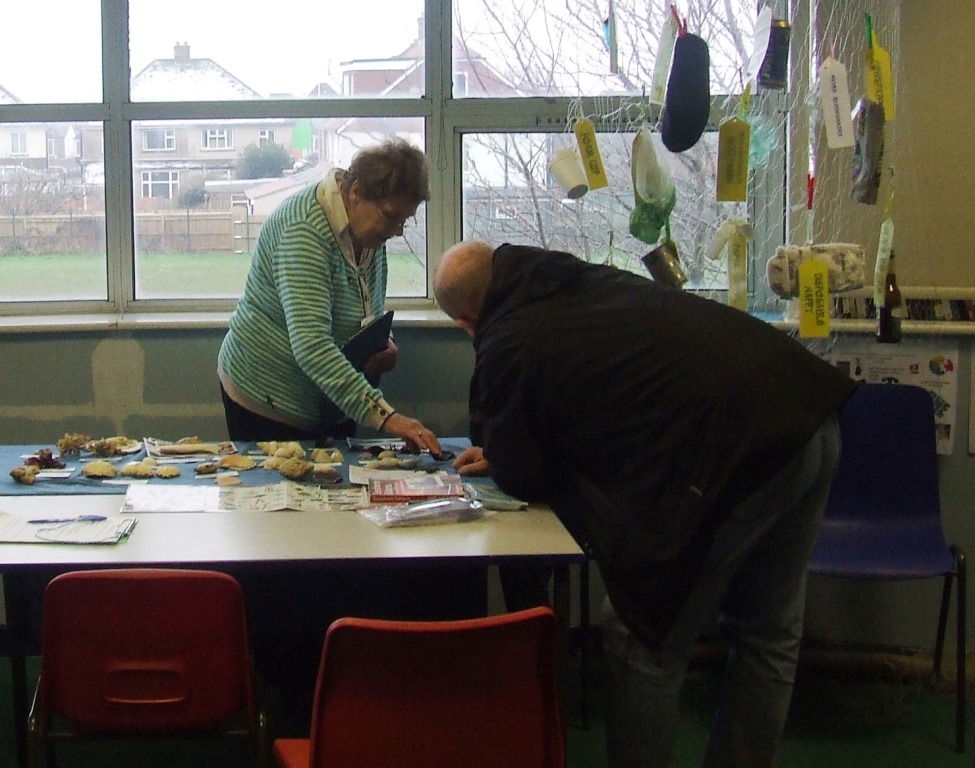
Its time again for the Brighton Science Festival and along with friends of Shoreham Beach we set up our beach and ocean exhibit.
Each year I get to share another of my adventures and also talk story about the many things I have learned and experienced during my global travels such as that 50% of the oxygen we breathe on land actually comes from phytoplankton in the ocean.
The ocean also moderates our climate and weather, provides fresh water and 15% of global food. New medicines are being discovered in the ocean and the ocean is also a great pace for fun and wellbeing.
Sadly, the ocean is being damaged by many human activities such as plastic, climate change which is warming the ocean threatening marine life and also causing flooding.
Man made carbon dioxide is also changing the chemistry of the ocean causing ocean acidification.


Shoreham Beach and the River Adur are currently suffering the local consequences of global sea level rise from climate change as the sea and river defences are being raised. As the oceans warm - the water expands taking up more space and so sea levels rise. Melting glaciers is also a major reason why sea levels are rising.


I have also encountered some amazing wildlife to. I have sat with penguins on the polar ice, come nose to nose with great white sharks, dived on coral reef and shipwrecks and much more.
I have also observed the amazing wildlife we have on our on beaches in the UK - including the amazing local nature reserve on Shoreham Beach.


In fact we ran two drop in workshops where we demonstrated some of the amazing animals that live in rock pools on Shoreham Beach.


An amazing thing happened, you will never guess, the sea anemone actually gave birth to a tiny baby sea anemone on the day.


In between the drop in sessions we ran a video showing some of the places I had visited and animals I have encountered.
This included penguins in Antarctica and South Africa, great white sharks off South Africa, humpback whales and Laysan albatross in the Hawaiian Islands, coral fish, turtles and much more.


Friends of Shoreham Beach had an amazing exhibit about the  rare shingle plants and the fascinating wildlife that lives on the beach. There was also a strandline quiz and a plastic pollution exhibit.


My sister Bella also shared her adventures - looking at why freshwater is so valuable - in nature and to wildlife as well as humans.

As you know Bella is based at the Lewes Railway land Nature Reserve where she explores how water is important not just to the animals that lives in freshwater but also to the many animals that visit freshwater to drink, bathe, catch food, or lay eggs.


Bella has made two trips to the Amazon Rainforest in Peru and see some amazing wildlife. But its hard to believe that there is a shortage of clean drinking water in the rainforest for humans and Bella visited a community where they had a new water filter to make the river water safe to drink. You can find out more about Bella the Bear at Bella Bear's World of Water.


It was an amazing day with lots of questions from fascinated visitors.


Wednesday, 1 July 2015

Ed the Bear shares Ocean Science at UK Stem Science Event

Hi all


We have returned again this year to the Big Bang South East Stem Science Event in Sussex, UK. It is great to see how stem science is really growing in Sussex. The first event we took part in 3 years ago had an attendance of about 2500 pupils and teachers.

This year event was attended by 7000 pupils and teachers. Booking for the event was suspended over a month before the event as 7000 is the maximum number allowed for the event.
Last year the event moved to a much bigger venue, the South of England Show Grounds and we were at the same venue again this year.

We brought an updated display showing Ed the Bears travels to scientists and other organisations around the world to learn about ocean science and human impact on the oceans.

We also brought some simple science demonstrations to help explain some ocean science issues.
One of the key ways that the oceans affect us every day is that they moderate our climate and weather. 
This is due to the Great Ocean Conveyor which transports ocean water heated at the equator across the ocean. On the way it looses heat and moisture to the atmosphere thus influencing our daily weather and the Earth's climate.

When the ocean water reaches the polar regions it cools, some of the freshwater becomes ice making the remaining water more salty (dense) so it sinks. More water moves to replace it and this powers the whole system. Its real name is the thermolhaline, thermo = temperature, haline = salinity.
We demonstrated how this works using cold and very salty water which we dyed red to show that it sinks straight down. This waster flows along the sea bed and will eventually return to the surface at the equator which completes the cycle.

We also exhibited an explanation of thermal expansion. As the oceans have warmed been warmed by climate change they have expanded. They now take up more space and so they have risen up the coast. Over half of  sea level rise has been caused by thermal expansion, much of the rest by melting ice caps.


We also included our demonstration of ocean acidification. The oceans absorb 25% of the carbon dioxide we emit into the atmosphere. This is now changing the water chemistry of the ocean threatening creatures that build their shells and bodies from calcium carbonate.
In our demonstration we put a sea shell in vinegar which slowly dissolves during the day. Creatures in the ocean are not dissolving, but they are struggling to access the calcium carbonate to build their shells and we are seeing thinner shells and even deformed shells that can make it easier for a predator to break through to eat the occupant.

Plastic debris was the other demonstration, a simple game that illustrates the problem that marine creatures have catching food without swallowing plastic. 
We even find plastic in the bodies of plankton. Tiny pieces of plastic can also absorb other pollutants increasing the risk to the oceans wildlife.

Ed the Bear wears a necklace made from a scientists ring band. the scientists placed it on the leg of an albatross chick which sadly died from swallowing plastic. Ed uses the necklace to share his experiences of the plight of these majestic birds.

People are often surprised how we could ever change the temerature of the oceans, pollute them or change their water chemistry. The graphic below helps put the size of the oceans into perspective
 The blue sphere to the right of planet earth represents all the water in all the oceans, from the surface to the ocean depths. The even smaller sphere to the right of this one represents all the freshwater on the earth!

We also included Bella Bears project about freshwater and freshwater habitats and included her trip last year to the Amazon with Rainforest Workshops http://amazonworkshops.com/

A completely separate project, but still focusing on Freshwater and freshwater habitats is Railway Land Live (a nature reserve on what was once railway land).  This focused on a Heritage Lottery Funded Project Raiwlaylandlive! which includes two underwater webcams and two surface webcams http://www.railwaylandlive.org/ and much more.

The site also includes information on how schools can take part next year. We also included information about a special one day Biosphere Festival on the site http://www.railwaylandproject.org/ on the 5th July. 
It was an amazing day and a great opportunity to share ocean science to a wide range of schools. We also had a chance to raise awareness of the marine education programme we run based at the Shoreham Beach Local Nature Reserve  http://www.fosbeach.com/education-on-shoreham-beach/

Bye for now