http://sussexmarinejottings.blogspot.co.uk/2016/08/annual-rock-pool-event-at-shoreham.html
Showing posts with label plastic debris. Show all posts
Saturday, 8 July 2017
Fishing net on beach
Fishing gear discovered on sandy beach inside the harbour at Shoreham while we were working with a school group.
http://sussexmarinejottings.blogspot.co.uk/2016/08/annual-rock-pool-event-at-shoreham.html
The net had been rolled as it was washed ashore. I tried to pull it up the beach, but it appeared to be hooked on a rock or something as it was impossible to move.
I inspected the net and could find no marine life entangled, unlike the fishing net we discovered at the annual rock pool event (last year) I run at Shoreham Beach each year for Friends of Shoreham Beach. A large section of net was found on the beach which contained many crabs and some fish (which had died) The live crabs were cut from the net and released. http://sussexmarinejottings.blogspot.co.uk/2016/08/annual-rock-pool-event-at-shoreham.html
Monday, 3 April 2017
A little bit of Shoreham Beach visits the EYE Eco Summit
Today we took a little bit of Shoreham Beach to Littlehampton Academy for the E.Y.E summit. E.Y.E Stands for Eco Young and Engaged – The E.Y.E. Project was established in 2008 by Tim Loughton, M.P. for East Worthing and Adur. The Project aims to raise sustainability awareness and encourage young people’s interest in the environment. It provides an additional opportunity for the young people within those schools to learn about environmental matters through fun and educational activities available at our Eco-Summit events across West Sussex.
There are now three EYE summits each year (and I have been privileged to have taken part in many since 2008).
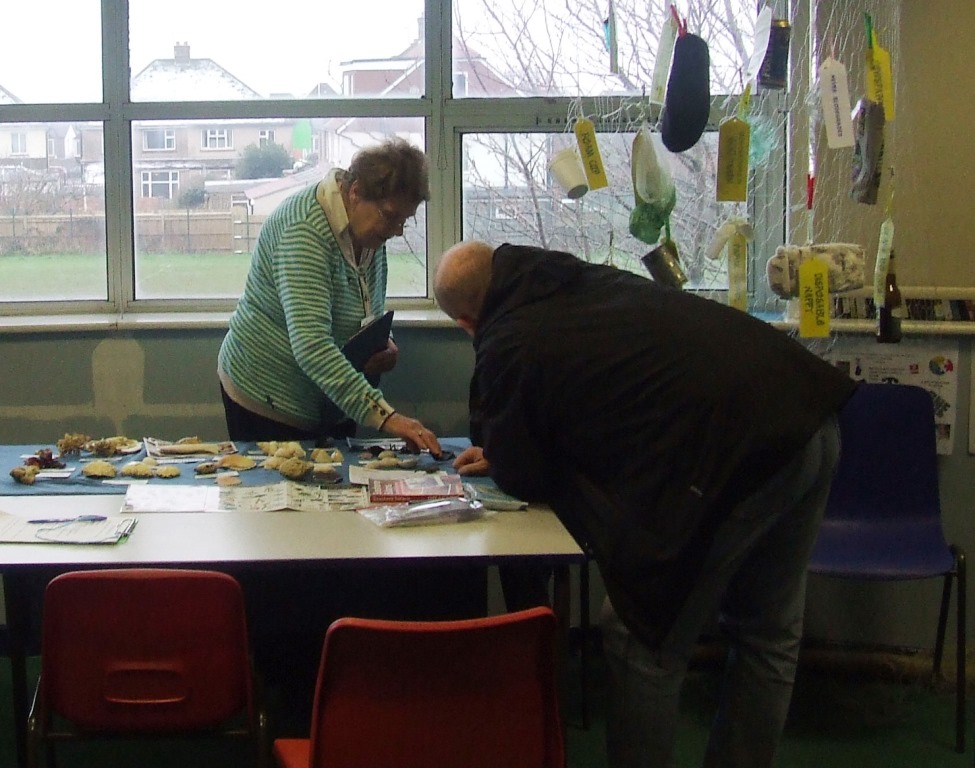
This year the focus of our workshops was the secrets of the seashore strandline, using two ‘pebble print laminate sheets’ to create two beaches and on each beach he created two strandlines made up of natural objects and marine debris.
We started the activity with an introduction to the nature reserve and then encouraged the children to identify the natural objects such as crab shells, ray, dogfish and whelk eggs as well as cuttlefish bones and various sea shells.
The first part of the workshop focused on the fascinating biodiversity along our coasts. This was followed by a PowerPoint quiz testing what the children had learned and adding extra facts and images of the animals that the natural objects came from. This included cuttlefish, dogfish developing in its egg case, tube worms, spider crab and piddock.
The workshop also explored marine debris on the beach and discussed the hazards it can cause and the different ways marine debris can find its way onto the beach.
Fishing net which was washed up by the tide, plastic bag left behind by a beach user, a shot gun cartridge that was washed down river and cotton buds that passed through the sewage system.
The workshop was repeated three times during the day along with other workshops run by Sussex Wildlife Trust, Southern Water, Weald & Downland Open Air Museum, Farming & Countryside Education and Plumpton College,Wastebuster and Sussex Green Living.
More pictures of the event taken my Littlehampton Gazette
Monday, 13 February 2017
Ed the Bear at the Brighton Science festival
Hi all
Its time again for the Brighton Science Festival and along with friends of Shoreham Beach we set up our beach and ocean exhibit.
Each year I get to share another of my adventures and also talk story about the many things I have learned and experienced during my global travels such as that 50% of the oxygen we breathe on land actually comes from phytoplankton in the ocean.
The ocean also moderates our climate and weather, provides fresh water and 15% of global food. New medicines are being discovered in the ocean and the ocean is also a great pace for fun and wellbeing.
Sadly, the ocean is being damaged by many human activities such as plastic, climate change which is warming the ocean threatening marine life and also causing flooding.
In fact we ran two drop in workshops where we demonstrated some of the amazing animals that live in rock pools on Shoreham Beach.
An amazing thing happened, you will never guess, the sea anemone actually gave birth to a tiny baby sea anemone on the day.
In between the drop in sessions we ran a video showing some of the places I had visited and animals I have encountered.
This included penguins in Antarctica and South Africa, great white sharks off South Africa, humpback whales and Laysan albatross in the Hawaiian Islands, coral fish, turtles and much more.
Friends of Shoreham Beach had an amazing exhibit about the rare shingle plants and the fascinating wildlife that lives on the beach. There was also a strandline quiz and a plastic pollution exhibit.
My sister Bella also shared her adventures - looking at why freshwater is so valuable - in nature and to wildlife as well as humans.
As you know Bella is based at the Lewes Railway land Nature Reserve where she explores how water is important not just to the animals that lives in freshwater but also to the many animals that visit freshwater to drink, bathe, catch food, or lay eggs.
Bella has made two trips to the Amazon Rainforest in Peru and see some amazing wildlife. But its hard to believe that there is a shortage of clean drinking water in the rainforest for humans and Bella visited a community where they had a new water filter to make the river water safe to drink. You can find out more about Bella the Bear at Bella Bear's World of Water.
It was an amazing day with lots of questions from fascinated visitors.
Its time again for the Brighton Science Festival and along with friends of Shoreham Beach we set up our beach and ocean exhibit.
Each year I get to share another of my adventures and also talk story about the many things I have learned and experienced during my global travels such as that 50% of the oxygen we breathe on land actually comes from phytoplankton in the ocean.
The ocean also moderates our climate and weather, provides fresh water and 15% of global food. New medicines are being discovered in the ocean and the ocean is also a great pace for fun and wellbeing.
Sadly, the ocean is being damaged by many human activities such as plastic, climate change which is warming the ocean threatening marine life and also causing flooding.
Man made carbon dioxide is also changing the chemistry of the ocean causing ocean acidification.
Shoreham Beach and the River Adur are currently suffering the local consequences of global sea level rise from climate change as the sea and river defences are being raised. As the oceans warm - the water expands taking up more space and so sea levels rise. Melting glaciers is also a major reason why sea levels are rising.
I have also encountered some amazing wildlife to. I have sat with penguins on the polar ice, come nose to nose with great white sharks, dived on coral reef and shipwrecks and much more.
I have also observed the amazing wildlife we have on our on beaches in the UK - including the amazing local nature reserve on Shoreham Beach.
In fact we ran two drop in workshops where we demonstrated some of the amazing animals that live in rock pools on Shoreham Beach.
An amazing thing happened, you will never guess, the sea anemone actually gave birth to a tiny baby sea anemone on the day.
In between the drop in sessions we ran a video showing some of the places I had visited and animals I have encountered.
This included penguins in Antarctica and South Africa, great white sharks off South Africa, humpback whales and Laysan albatross in the Hawaiian Islands, coral fish, turtles and much more.
Friends of Shoreham Beach had an amazing exhibit about the rare shingle plants and the fascinating wildlife that lives on the beach. There was also a strandline quiz and a plastic pollution exhibit.
My sister Bella also shared her adventures - looking at why freshwater is so valuable - in nature and to wildlife as well as humans.
As you know Bella is based at the Lewes Railway land Nature Reserve where she explores how water is important not just to the animals that lives in freshwater but also to the many animals that visit freshwater to drink, bathe, catch food, or lay eggs.
Bella has made two trips to the Amazon Rainforest in Peru and see some amazing wildlife. But its hard to believe that there is a shortage of clean drinking water in the rainforest for humans and Bella visited a community where they had a new water filter to make the river water safe to drink. You can find out more about Bella the Bear at Bella Bear's World of Water.
It was an amazing day with lots of questions from fascinated visitors.
Tuesday, 14 June 2016
Ed the Bear shares his One Ocean message at Adur World Oceans Day
Ed the Bear took part in Adur World Oceans Day again this year.
The display stand had been updated to include Ed the Bears travels since last year.
All the flags in the marquee have been put up because its the Queens Birthday.
The display included information about why the oceans are so important, such as how 50% of the oxygen we breathe comes from the ocean, 15% of the food we eat, new medicines etc.
The display also highlighted the threats to the oceans and marine wildlife and also showed people Ed the Bear had met on his travels and some of the fascinating projects he had helped with, such as recuing sea turtles and restoring a damaged coral reef.
There are also a demonstration about the dangers of Ocean Acidification.
And also an activity to learn about plastics in the ocean. The children had to get as much food (rice) without catching the plastic (red lentils). A plastic bottle filled with water and bits of plastic illustrated how plastic pollutes the entire water column.
This year we also brought a small aquarium tank with some rock pool animals.
A USB microscope cam showed the animals close up and in detail on a TV monitor.
This included shore crabs
Sea anemones
A live cockle
And my favourite, barnacles.
Ed also looked around the other exhibits which included a stand by Friends of Shoreham Beach - from the beach Ed the Bear comes from.
The display had pictures of the rare vegetated shingle plants and wildlife. There was also a display about plastic pollution.
There was also a display of local marine life in aquarium display tanks.
Ed the bear came eye to eye with some live lobsters and edible crabs.
Other displays included the brackish Wide Water lagoon, a mixture of salt and freshwater
There were lots of interested visitors, many of them families with children. They were amazed at Ed the Bears travels and saddened by what humans are doing to the ocean.
It was a fantastic day
Subscribe to:
Posts (Atom)