Showing posts with label schools. Show all posts

Monday, 3 April 2017

A little bit of Shoreham Beach visits the EYE Eco Summit


Today we took a little bit of Shoreham Beach to Littlehampton Academy for the E.Y.E summit. E.Y.E Stands for Eco Young and Engaged – The E.Y.E. Project was established in 2008 by Tim Loughton, M.P. for East Worthing and Adur. The Project aims to raise sustainability awareness and encourage young people’s interest in the environment. It provides an additional opportunity for the young people within those schools to learn about environmental matters through fun and educational activities available at our Eco-Summit events across West Sussex.
There are now three EYE summits each year (and I have been privileged to have taken part in many since 2008).
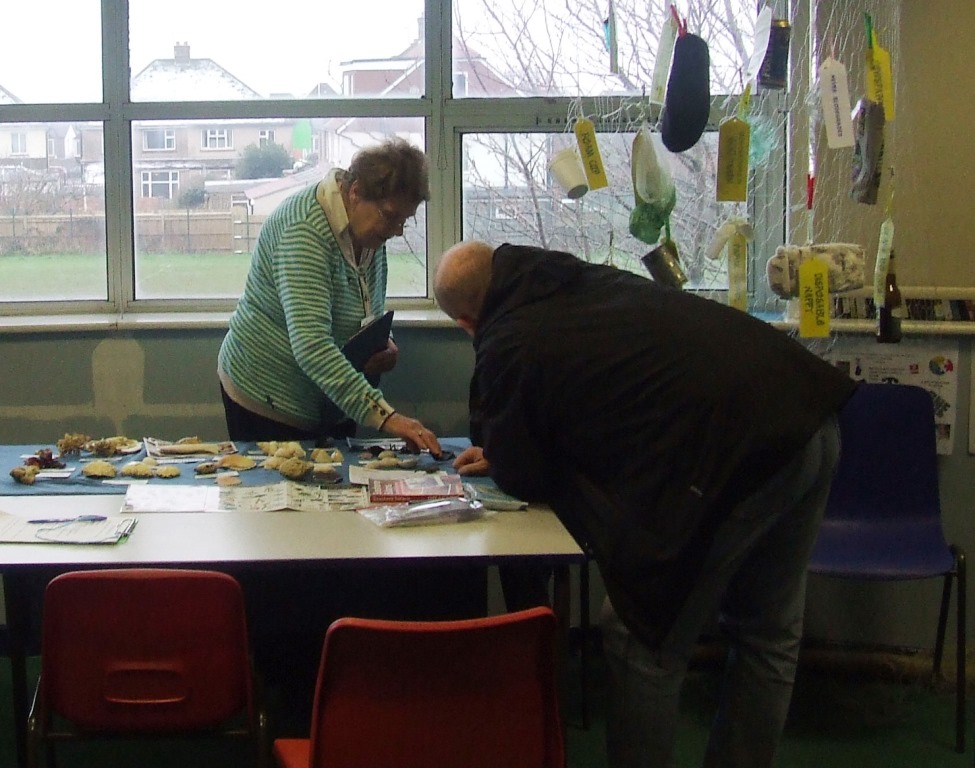
This year the focus of our workshops was the secrets of the seashore strandline, using two ‘pebble print laminate sheets’ to create two beaches and on each beach he created two strandlines made up of natural objects and marine debris.        


                                                                                                                                                     We started the activity with an introduction to the nature reserve and then encouraged the children to identify the natural objects such as crab shells, ray, dogfish and whelk eggs as well as cuttlefish bones and various sea shells.
The first part of the workshop focused on the fascinating biodiversity along our coasts. This was followed by a PowerPoint quiz testing what the children had learned and adding extra facts and images of the animals that the natural objects came from. This included cuttlefish, dogfish developing in its egg case, tube worms, spider crab and piddock.


The workshop also explored marine debris on the beach and discussed the hazards it can cause and the different ways marine debris can find its way onto the beach.


Fishing net which was washed up by the tide, plastic bag left behind by a beach user, a shot gun cartridge that was washed down river and cotton buds that passed through the sewage system.

The workshop was repeated three times during the day along with other workshops run by Sussex Wildlife Trust, Southern Water, Weald & Downland Open Air Museum, Farming & Countryside Education and Plumpton College,Wastebuster and Sussex Green Living.

 Steve also took a display stand that included Shoreham Beach Local Nature Reserve, our marine education Programme and of course me, Ed the Bear

More pictures of the event taken my Littlehampton Gazette

Monday, 13 February 2017

Ed the Bear at the Brighton Science festival

Hi all


Its time again for the Brighton Science Festival and along with friends of Shoreham Beach we set up our beach and ocean exhibit.
Each year I get to share another of my adventures and also talk story about the many things I have learned and experienced during my global travels such as that 50% of the oxygen we breathe on land actually comes from phytoplankton in the ocean.
The ocean also moderates our climate and weather, provides fresh water and 15% of global food. New medicines are being discovered in the ocean and the ocean is also a great pace for fun and wellbeing.
Sadly, the ocean is being damaged by many human activities such as plastic, climate change which is warming the ocean threatening marine life and also causing flooding.
Man made carbon dioxide is also changing the chemistry of the ocean causing ocean acidification.


Shoreham Beach and the River Adur are currently suffering the local consequences of global sea level rise from climate change as the sea and river defences are being raised. As the oceans warm - the water expands taking up more space and so sea levels rise. Melting glaciers is also a major reason why sea levels are rising.


I have also encountered some amazing wildlife to. I have sat with penguins on the polar ice, come nose to nose with great white sharks, dived on coral reef and shipwrecks and much more.
I have also observed the amazing wildlife we have on our on beaches in the UK - including the amazing local nature reserve on Shoreham Beach.


In fact we ran two drop in workshops where we demonstrated some of the amazing animals that live in rock pools on Shoreham Beach.


An amazing thing happened, you will never guess, the sea anemone actually gave birth to a tiny baby sea anemone on the day.


In between the drop in sessions we ran a video showing some of the places I had visited and animals I have encountered.
This included penguins in Antarctica and South Africa, great white sharks off South Africa, humpback whales and Laysan albatross in the Hawaiian Islands, coral fish, turtles and much more.


Friends of Shoreham Beach had an amazing exhibit about the  rare shingle plants and the fascinating wildlife that lives on the beach. There was also a strandline quiz and a plastic pollution exhibit.


My sister Bella also shared her adventures - looking at why freshwater is so valuable - in nature and to wildlife as well as humans.

As you know Bella is based at the Lewes Railway land Nature Reserve where she explores how water is important not just to the animals that lives in freshwater but also to the many animals that visit freshwater to drink, bathe, catch food, or lay eggs.


Bella has made two trips to the Amazon Rainforest in Peru and see some amazing wildlife. But its hard to believe that there is a shortage of clean drinking water in the rainforest for humans and Bella visited a community where they had a new water filter to make the river water safe to drink. You can find out more about Bella the Bear at Bella Bear's World of Water.


It was an amazing day with lots of questions from fascinated visitors.


Wednesday, 15 June 2011

School Visit to teach about Oceans

Hi all

Today I had a really fun and interesting day teaching children at Peter Gladwin Primary School all about the amazing oceans. The children found out about my special beach with rare vegetated shingle and fascinating animal visitors. They also learned a lot about the ocean and about the dangers marine animals face from pollution and plastic debris.

Some of the children learned about the plight of the Laysan albatross that I met in the Hawaiian Islands. They found out that the parents accidentally feed plastic litter to their chicks as well as food because they can't tell the difference.

The children really enjoyed my visit and had their photograph taken with me. They were very concerned about the threats to ocean wildlife and came up with loads of ideas about how they could help.

Two of the children made me and my buddy Steve (school children call him Mr Savage) a special thank you card which they gave us at the end of the day on behalf of all the children. 
It was really nice.

They also made us both badges. I am wearing mine. It says 'Fantastic Bear Well Done'.
I hope I get the chance to visit them again another time.

I'm off to America again tomorrow to visit the NABS Youth Summit. I think I had better finish packing and have an early night.

Bye for now, Ed the Bear

Saturday, 21 May 2011

Teaching children about the vegetated shingle on Shoreham Beach

Hi all


While I have been here in the UK I have been helping out on the Shoreham Beach Local Nature Reserve.
As you know, my local beach is part of the nature reserve. One of my favourite plants, Sea Kale, is now in flower.
This plant is called bitter sweet. This is a small plant, they grow much bigger. This plant is also called woody nightshade, related to deadly night shade.
The berries are poisonous.

Today we worked with a school group who were learning about the nature reserve. They did a transect survey of the shingle plant communities.
This means they measured a straight line from the top of the beach down to the high tide mark. They then divided this straight line into 1 metre squares and recorded the different plants they found.
They used special identification sheets so that they could recognise the different plants.

Later we recorded the different animals that we could see.


I saw this herring gull trying to break open a seashell. It kept flying up into the sky and then dropping the seashell to break it so the gull could eat the animal inside.

We saw birds visiting the plants as well. We also saw lots of lizards that were enjoying the sunshine.

My buddy Steve has been studying the bees that visit the special vegetated shingle plants. The bees pollinate the flowers so they are very important. The children helped to record the bees we saw.
This is a two banded bumble bee on the sea kale flowers.

This is a honey bee on the sea kale

This is a red tailed bumble bee visiting a yellow horned poppy flower.

This red tailed bumble bee is visiting the thrift

There many other insects on the plants
This woolly caterpillar will grow into a beautiful garden tiger moth


We saw these two beetles as well.

There were also many spiders, some in webs others like this zebra spider runs along the ground. It is a type of jumping spider which can also jump from plant to plant.

We saw lots of different animals and of course the most important thing about the vegetated shingle is that it is a rare habitat both in the UK and worldwide. I am really lucky to live near such as special beach.

Bye for now

Ed the Bear


Sunday, 8 May 2011

School children learn about the Adventures of Ed the Bear.

Hi all

Me and my buddy Steve taught some more children about the oceans and the amazing wildlife that lives there. We also spoke about the dangers to ocean habitats and the marine wildlife caused by marine debris and climate change. We explained why I started my travels, the conservation problems I have investigated, the amazing wildlife and people I have encountered along the way and perhaps most important how we can all help reduce our impact on the oceans and the environment.

Before we started I played the short video clip made by Ken Stewart and some of the youths from the Tennessee Aquatic Project. You can watch this on youtube, see link below.

http://www.youtube.com/watch?v=1T7v3Vf0zrw&feature=related

As usual we started off with a quick quiz to find out what the children already knew about the ocean.

The children then did an activity that shows how all the oceans are linked together.
We then discussed the things that prevent marine animals from moving from one ocean to another such as not enough shelter, sea temperature, too far and other suggestions.

While sight is the most important sense for humans, this is not always true for other animals. In the sea it is often murky or gloomy and so for many sea animals sound is most important.
So we did a quiz which included a wide range of different sounds which included whales, seals, seabirds, snapping shrimp and blue striped grunt fish. Other sounds included a boat propeller, an undersea earthquake and the sound of waves on the seashore.
The children had to chose which sound was made by which sound source. Some where easy to work pout while others were a bit more tricky.


The children found out about Shoreham Beach and how my worries about global issues damaging this beach led to my travels.
They also found out a bit about the rare habitat that covers much of this beach called vegetated shingle.

The children learned about many of the animals I encountered on my travels such as these cute sea otters.

They also found out about some of the people I had met during my travels such as the youths at the NABs Youth Summit.

We then discussed marine litter and asked the children to think about what objects make up marine litter and where it comes from.
I also showed the children what I had found our about marine debris and litter during my travels.

This ended with my experiences with Fred the Monkey and what I had learned from him about the terrible plight of the Laysan Albatross who live in the Hawaiian Islands.

The children took part in a special activity that helps to demonstrate the dangers the albatross face. The children were divided into groups of three. Two of the children would play the role of albatross parents one child would play the role of their chick.

We laid down a series of small cards on the floor. Each card had a picture of either food or an item of marine litter. The pictures were face down so they could not see what the cards were.

Then one at a time, the parent albatross (children) collect a card to see what they have taken back to feed their chick.


When they have collected a card they write down on a sheet what item they have collected.

The children carried on until they each had 10 items. The children then added up the amount of food items and the amount of litter items.

This group was lucky, they feed their chick 9 squid and only one piece of plastic litter


This group were lucky. Most of the other groups had 4 or more pieces of plastic, some of them had collected large plastic items such as a tooth brush or a disposable lighter.

The children were also asked if they were surprised at the type of litter items that the albatross parents collected, and of course they were surprised. So was I when Fred told me.

The children also learned about global warming and climate change. As part of this the children learned about ocean acidification. This is caused because because the oceans are absorbing too much carbon dioxide from the air. This is causing the oceans to become acidic which is disastrous to all animals with hard calcium carbonate shells such as crabs, shellfish and corals.

This is already making it difficult for sea creatures to build there shells. Soon we might start to see shells dissolving. To help the child understand this we did an experiment.
Earlier in the day we put a sea shell in a weak acid (vinegar - quite safe as we use it to cock and put on our chips).

We looked at the seashell ever hour and recorded any changes and by the end of the day the seashell had already half dissolved. This is really scary.

We then spoke about how we all have an impact on the oceans (even me and my buddy Steve). But we discussed that we can all help the oceans by reducing the impact that we have on the oceans. The children made a list of all the things they felt they could do to help and then sighed a pledge to me - Ed the Bear.


At the end of the day we gave all the children a special certificate as they had all worked so hard.

Bye for now

Ed the Bear